Welcome to the Louvre, a world-renowned museum in the heart of Paris that bridges centuries of human creativity. From ancient artifacts to celebrated paintings and sculptures, it offers an unparalleled journey through global art and history.
Summary
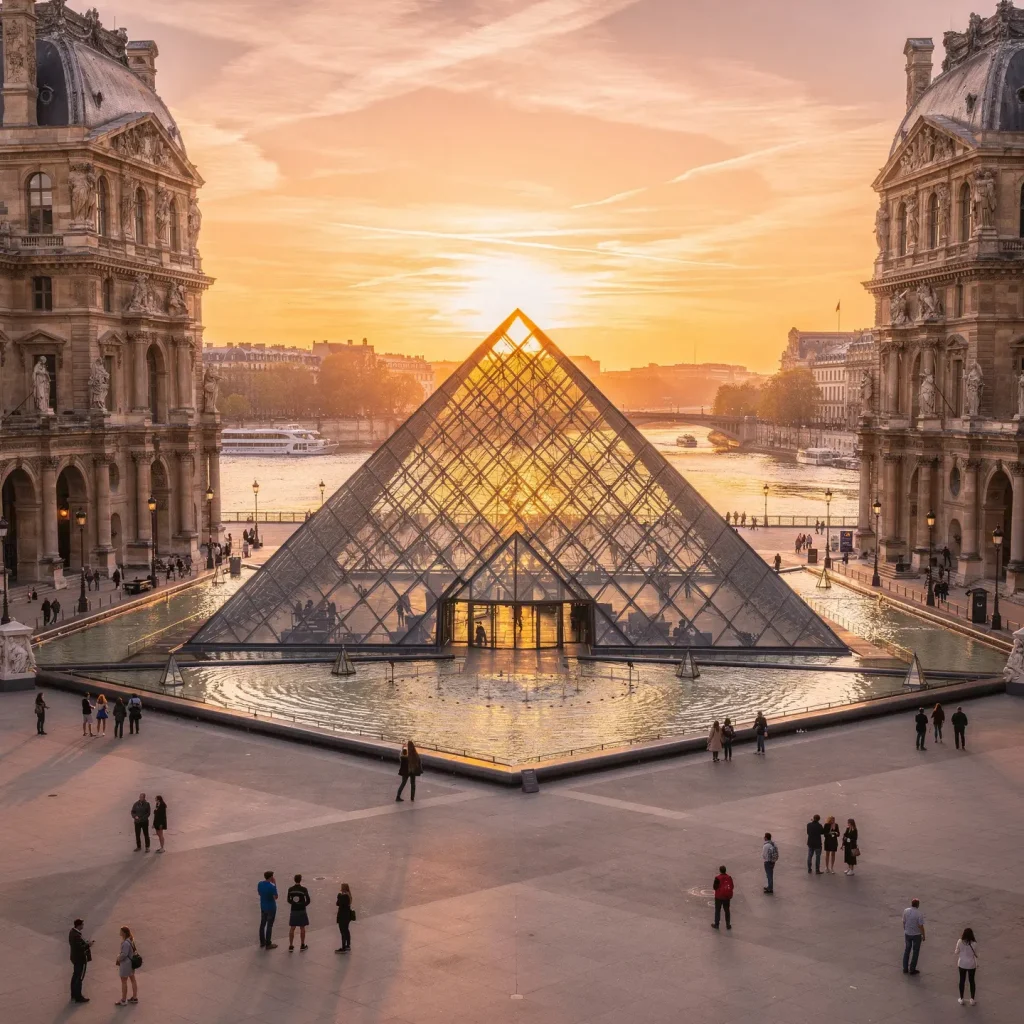
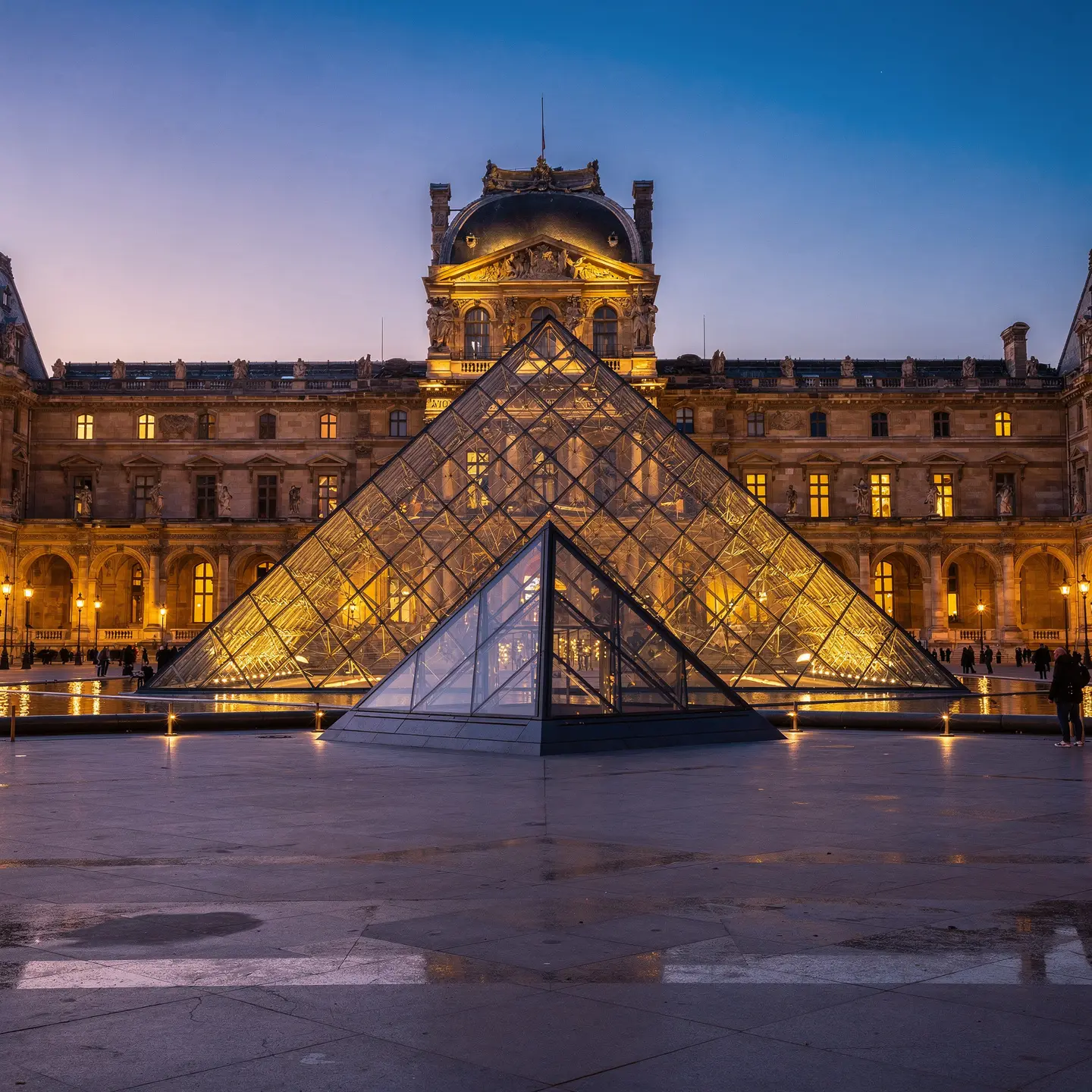
The Louvre Museum is the largest art museum in the world and a historic monument located on the Right Bank of the Seine. Its vast collections span from ancient civilizations to the 19th century, featuring iconic works like Leonardo da Vinci’s Mona Lisa and the Venus de Milo. The museum’s architecture blends the former royal palace with the modern glass Pyramid entrance, creating a striking dialogue between past and present. Visitors can explore departments including Egyptian Antiquities, Near Eastern Antiquities, Greek, Etruscan and Roman, Islamic Art, Sculptures, Decorative Arts, Paintings, and Prints and Drawings.
Fun Facts
- The Louvre began as a medieval fortress in the late 12th century before evolving into a royal palace and, later, a public museum.
- It opened to the public in 1793 during the French Revolution, making it one of the earliest public museums in the world.
- The iconic glass Pyramid, designed by architect I. M. Pei, was inaugurated in 1989 and serves as the main entrance.
- The museum displays over 35,000 works at any given time, drawn from a collection numbering in the hundreds of thousands.
- Beyond the Mona Lisa, highlights include the Winged Victory of Samothrace, Liberty Leading the People, and the Code of Hammurabi.
Plan your visit to experience centuries of art under one roof, from ancient wonders to timeless masterpieces. Consider booking timed-entry tickets and mapping your must-see galleries in advance for a smooth, inspiring day at the Louvre.